
Summary
- Aramex reported Q1 revenues of AED 1,60 billion, up 2 per cent.
- Domestic Express rose 11 per cent, offsetting International Express decline.
- Margins narrowed as "regional conflict" disrupted trade and raised costs.
- EBITDA fell 3 per cent; Accelerate28 must keep "heavy lifting".
- Debt refinanced into sustainability-linked facility, as new CEO stresses resilience.
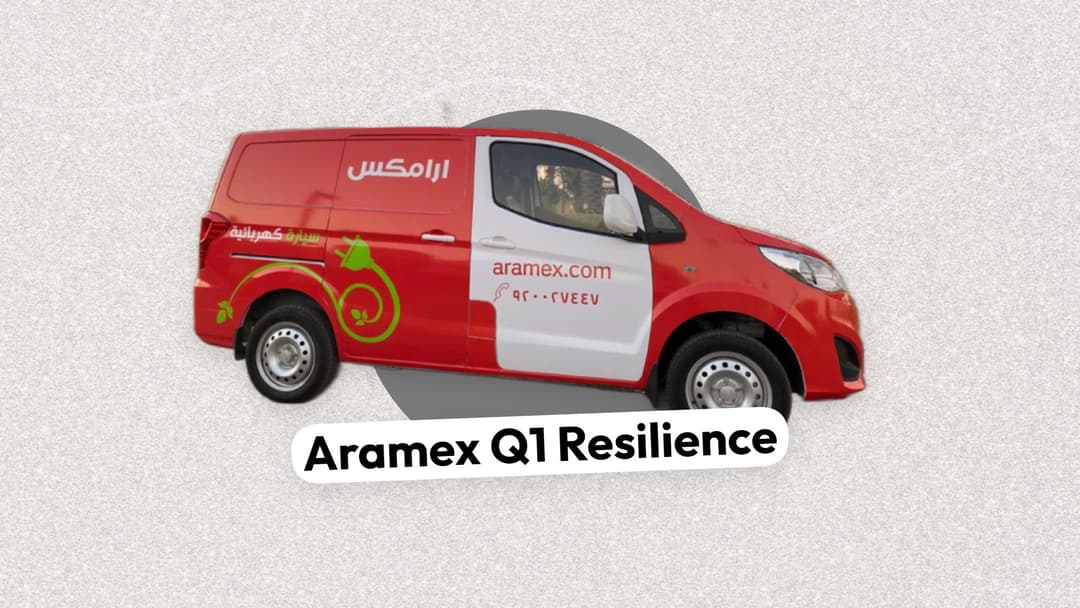
Aramex has kicked off 2026 on a steady note, reporting first-quarter revenues of AED 1.60 billion, a 2 per cent increase compared with the same period last year. In a region where headlines often swing between boom and disruption, that kind of stability feels, well… quietly impressive.
For the three months ending 31 March 2026, the Dubai-listed logistics firm posted revenues of AED 1.599 billion, up from AED 1.563 billion in Q1 2025. Growth was largely driven by Domestic Express, which climbed 11 per cent year on year, alongside Freight Forwarding, up 7 per cent, and Logistics, which rose 9 per cent. These gains helped offset a 9 per cent decline in International Express, a segment that felt the pressure more sharply as regional tensions escalated in March.
Gross profit reached AED 342.5 million, although the margin narrowed to 21.4 per cent from 23.3 per cent a year earlier. EBIT stood at AED 52 million, compared with a normalised AED 63 million in Q1 2025. Net profit came in broadly flat at AED 17 million, while normalised net profit declined to AED 17 million from AED 27.5 million last year. Not dramatic swings, but clearly a business navigating choppier waters.
Nicolas Sibuet, who served as Acting Group Chief Executive Officer during the period, said the company entered the year with strong momentum, pointing to a record December 2025 followed by January and February performances that exceeded expectations. Logistics continued to stand out, Domestic Express volumes remained solid, and the company’s Accelerate28 transformation programme began delivering cost efficiencies.
Then March arrived. The outbreak of regional conflict disrupted trade flows and business confidence across parts of the Gulf, affecting certain trade lanes and requiring operational adjustments. Sibuet noted that employee safety and operational continuity were the top priorities, with teams adapting routes and using the flexibility of Aramex’s network to keep deliveries moving.
I’ve seen before how quickly logistics firms in our region must switch gears when the unexpected hits. It’s a bit like steering a ship through sudden fog, not ideal, but you rely on your systems and your crew. For many startups we speak to at Arageek, especially those in e-commerce, dependable logistics isn’t a luxury; it’s make or break. So this kind of resilience matters more than the headline numbers sometimes show.
Indeed, January and February had set a promising tone. The company reported that Oceania delivered a meaningful operational turnaround, while Africa showed significant improvement. The GCC and India Subcontinent remained core contributors, accounting for 46 per cent of total revenues, underlining how central the region continues to be for the group.
Costs, however, told their own story. The shift in product mix, higher line-haul expenses and fuel-related pressures weighed on margins. EBITDA slipped 3 per cent year on year to AED 143.1 million, with the margin at 8.9 per cent. It’s not catastrophic, but it does show that efficiency programmes like Accelerate28 will need to keep doing the heavy lifting.
On the financing side, Aramex refinanced around AED 815 million of debt from the US and UK into a UAE-domiciled, sustainability-linked facility on competitive terms. The move is designed to strengthen the balance sheet and reduce the cost of capital. I reckon shifting debt into a structure that ties into sustainability targets is more than box-ticking; it signals where large logistics players see long-term value, and risk.
As of 1 May, Amadou Diallo has taken over as Group Chief Executive Officer. Commenting on the results, he said the first quarter underscored the resilience of the business and the strength of its network, adding that the focus now is on disciplined execution and delivering sustainable value.
That said, the months ahead are unlikely to be plain sailing. Market conditions remain dynamic, to put it mildly, and geopolitical uncertainty has not vanished overnight. On the flip side, Aramex operates in more than 600 cities across 70 countries and employs over 16,000 people, scale that can be a real ace up its sleeve when routes need rerouting fast.
For founders and operators across MENA, logistics may sound like background noise compared to flashy funding rounds. But without it, the entire startup engine grinds to a halt. Aramex’s Q1 performance may not be extraordinary, but it is, in many ways, a resillient reminder that in uncertain times, consistency can be just as powerful as rapid growth.
🚀 Got exciting news to share?
If you're a startup founder, VC, or PR agency with big updates—funding rounds, product launches 📢, or company milestones 🎉 — AraGeek English wants to hear from you!
✉️ Send Us Your Story 👇