Google at a glance
Alphabet’s annual report for 2025 counts 15 Google products with more than half a billion users each, seven of them with more than two billion. Google LLC is the American company behind them: Search, which handled about 91% of the world’s web searches in October 2026, YouTube, Android, Chrome, Gmail, Maps, the Gemini AI models and Google Cloud.
Since 2 October 2015 Google has belonged to Alphabet Inc., a holding company that also owns the businesses it calls Other Bets, the largest of which is the self-driving car company Waymo. Alphabet is the company listed on Nasdaq, so the financial figures on this page are Alphabet’s.
Alphabet’s revenue was $402.8 billion in 2025, and it had 204,757 employees on 30 September 2026. Sundar Pichai has been chief executive of Google since 2015 and of Alphabet since 2019, while the founders, Larry Page and Sergey Brin, still control more than half of the votes.
- Revenue
- $402.8 billion 2025 (Alphabet)
- Net income
- $132.2 billion 2025 (Alphabet)
- Google Cloud revenue
- $58.7 billion 2025
- Capital expenditure
- $91.4 billion 2025 (Alphabet)
Key moments
- 1998Larry Page and Sergey Brin incorporate Google Inc. in California and set up in a Menlo Park garage.
- 1999First venture funding: $25 million from Sequoia Capital and Kleiner Perkins.
- 2000AdWords launches, and Google becomes Yahoo's default search provider.
- 2001First profitable year; Eric Schmidt becomes chief executive.
- 2004Gmail goes into testing; IPO on Nasdaq at $85 a share.
- 2005Google Maps launches, and Google buys Android.
- 2006YouTube is bought for $1.65 billion in stock.
- 2008Chrome and the first Android phone are announced.
- 2014Deals for DeepMind in London and for Nest Labs.
- 2015Alphabet becomes the parent company; Sundar Pichai becomes Google's CEO.
- 2019Page and Brin step back, and Pichai also takes over Alphabet.
- 2020Market value passes $1 trillion; the Justice Department files its search case.
- 2023Google DeepMind is formed, Gemini 1.0 launches and the Dammam cloud region opens.
- 2024First cash dividend; a US court rules that Google is a monopolist in search.
- 2025Market value passes $3 trillion, and annual revenue tops $400 billion.
- 2026The Gemini app reaches 1 billion users, and Anthropic, nearly 14% owned by Google, lists on Nasdaq.
History of Google
1995 to 1999: from Stanford to a Menlo Park garage
Larry Page and Sergey Brin met at Stanford University in 1995, and by the following year they had built a search engine called BackRub that worked from the links between web pages. They later renamed it Google, a play on googol, the mathematical term for 1 followed by 100 zeros.
In August 1998 Andy Bechtolsheim, a co-founder of Sun Microsystems, wrote the pair a $100,000 check, the day Google says it was “officially born”. The company was incorporated in California on 4 September 1998 and set up in the garage of Susan Wojcicki’s house in Menlo Park, where the washer and dryer came with the rent. Wojcicki became employee number 16 and later ran YouTube. On 7 June 1999 Google announced $25 million from Sequoia Capital and Kleiner Perkins, and that year it moved into offices in Palo Alto with eight employees.
2000 to 2004: AdWords and an auction IPO
Google first earned money in 1999 by licensing its search technology. It became Yahoo’s default search provider in June 2000, launched AdWords that October and turned profitable in 2001. In July 2001 Eric Schmidt took over from Page as chief executive.
Gmail went into testing in April 2004 with up to 1 GB of storage. The IPO prospectus, dated 18 August 2004, offered Class A shares at $85 each on Nasdaq under the ticker GOOG, with the price set by a Dutch auction. Its founders’ letter declared that “Google is not a conventional company”, and its Class B shares carried ten votes each.
2005 to 2010: Maps, YouTube, Android and Chrome
Google Maps launched in February 2005, and in August that year Google bought Android. On 9 October 2006 Google agreed to buy YouTube for $1.65 billion in stock. September 2008 brought the Chrome browser on the 1st and the first Android phone on the 23rd. In March 2010 Google stopped censoring its search results in China, which led to a ban there, and that October it began testing self-driving cars in California.
2011 to 2019: the birth of Alphabet
Page returned as chief executive in April 2011, and that August Google announced the $12.5 billion purchase of Motorola Mobility. In January 2014 it agreed to buy the London AI lab DeepMind.
In August 2015 Page announced a new holding company, Alphabet, a name he said also worked as “alpha-bet”, alpha being an investment return above a benchmark. The change took effect on 2 October 2015, when Google shares turned into Alphabet shares one for one, and that month Sundar Pichai became Google’s chief executive. On 3 December 2019 Page and Brin stepped back from management, and Pichai took over Alphabet as well. The founders stayed on the board.
2020 to 2025: the AI race
Alphabet’s market value passed $1 trillion for the first time in 2020. In January 2023 Google cut 12,000 jobs, about 6% of its workforce, and the next month it announced Bard, whose launch demo contained a factual error that wiped about $100 billion off Alphabet’s market value.
On 20 April 2023 Google merged Google Brain and DeepMind into Google DeepMind, led by Demis Hassabis, and Gemini 1.0 followed on 6 December 2023. Alphabet paid its first cash dividend in April 2024. On 18 March 2025 Google agreed to buy the cloud security company Wiz for $32 billion in cash, its largest deal, and on 15 September 2025 Alphabet became the fourth company, after Apple, Microsoft and Nvidia, to be worth $3 trillion. Gemini 3 launched on 18 November and was the first Gemini model to reach Search on its first day. Alphabet ended 2025 with revenue above $400 billion for the first time.
Google in 2026
Alphabet raised its capital spending guidance for 2026 to $180 billion to $190 billion, and on 1 June announced an $80 billion equity raise for AI compute, including a $10 billion private placement to Warren Buffett’s Berkshire Hathaway. Wiz closed in March at $29.5 billion after price adjustments. The market value stood at about $4.8 trillion at the close on 8 May, and the shares set their record close on 13 May.
Third-quarter revenue rose 25% to $127.6 billion, Google Cloud grew 103%, and the Gemini app reached 1 billion users. Google released Gemini 4 Argon on 1 October, and Waymo began service in San Antonio, San Diego and Tampa on 14 October. On 19 November Anthropic, nearly 14% owned by Google, made its Nasdaq debut at a value of about $2 trillion, and Alphabet’s Class A shares fell 3.46% that day.
Google products and services
Alphabet reports three segments: Google Services, Google Cloud and Other Bets. Its annual report for 2025 says all 15 of its products with more than half a billion users, seven of them with more than two billion, use Gemini models.
| Product | What it is | Year |
|---|---|---|
| AdWords | Search advertising | 2000 |
| Gmail | 2004 | |
| Google Maps | Maps | 2005 |
| YouTube | Video (acquired) | 2006 |
| Android | Mobile operating system (first phone) | 2008 |
| Chrome | Web browser | 2008 |
| Google+ | Social network (closed in 2018) | 2011 |
| Pixel | Smartphones | 2016 |
| Gemini | AI models and assistant | 2023 |
Search and advertising
StatCounter put Google’s share of worldwide searches at 91.05% in October 2026, against 4.8% for Microsoft’s Bing. Results now carry AI Overviews, which had 2 billion monthly users in November 2025, and AI Mode. “Google Search & other” brought in $224.5 billion in 2025, more than half of Alphabet’s revenue.
YouTube
YouTube has been run since 2023 by Neal Mohan, who replaced Susan Wojcicki. Its ads and subscriptions brought in more than $60 billion in 2025, $40.4 billion of it from ads, and YouTube Music and Premium had more than 150 million subscribers, trials included, in the third quarter of 2026.
Android, Chrome and devices
Google Services also covers Android, Chrome, Google Play, Gmail, Maps, Photos and Drive, plus hardware such as the Pixel 10 phones. Device sales sit in “subscriptions, platforms and devices” with YouTube’s subscriptions, Google One and Play, a line worth $48.0 billion in 2025.
Gemini and AI
Google DeepMind builds the Gemini models, from Gemini 1.0 in December 2023 to Gemini 4 Argon and Carbon in the third quarter of 2026. The Gemini app reached 1 billion users in that quarter, and Pichai called it the fastest-growing product in Google’s history. Google also designs its own AI chips, Tensor Processing Units, now in their seventh generation, Ironwood, and since the second quarter of 2026 it has sold TPU systems to some customers for their own data centers.
Google Cloud
Google Cloud combines Google Cloud Platform and Google Workspace and sells AI infrastructure, more than 200 foundation models through Vertex AI, and cybersecurity, now including Wiz. Revenue was $58.7 billion in 2025 and $30.7 billion in the third quarter of 2026 alone. On 30 September 2026 Google Cloud had a revenue backlog of $560.8 billion.
Other Bets: Waymo and the rest
Waymo, the self-driving car company, is the largest of the Other Bets, which also include the drone delivery company Wing, X, which Alphabet calls its “moonshot factory”, and Isomorphic Labs, which uses AI to discover drugs. Together they had $1.5 billion of revenue and a $7.5 billion operating loss in 2025. Waymo raised $16.0 billion in February 2026, mostly from Alphabet, and was giving more than 500,000 fully driverless rides a week by April.
Google headquarters and data centers
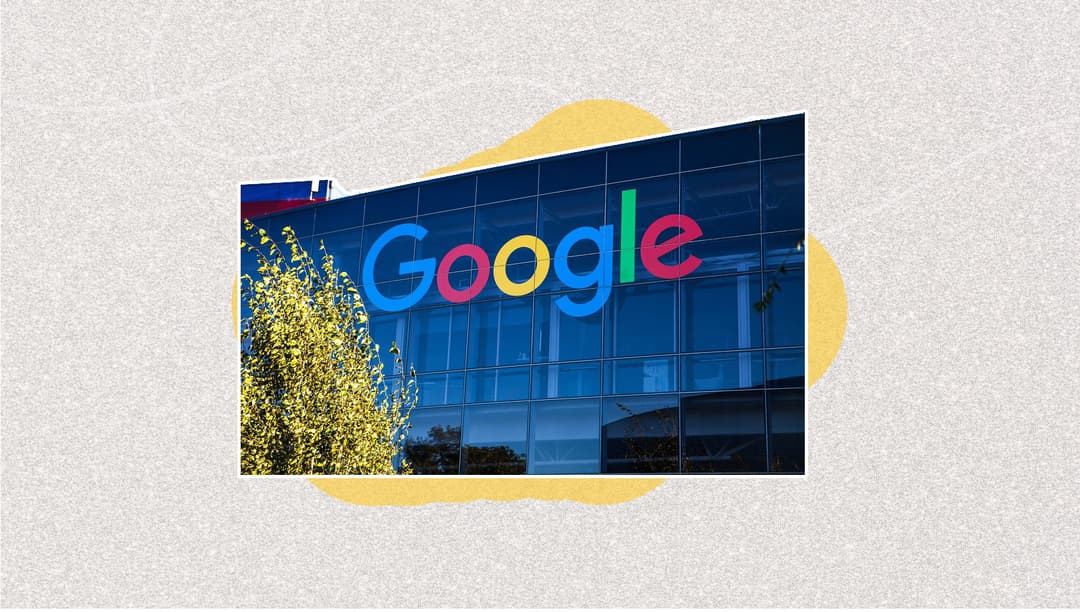
Google and Alphabet are based at 1600 Amphitheatre Parkway in Mountain View, California, the campus known as the Googleplex, which was already the address on the 2004 IPO prospectus. Alphabet owns and leases offices and data centers mainly in Asia, Europe and North America.
| Site | Location | Notes |
|---|---|---|
| Googleplex | Mountain View, California, US | Headquarters of Google and Alphabet |
| Mayes County data center | Pryor, Oklahoma, US | Built in 2007 |
| Papillion data center | Nebraska, US | Operating since 2019 |
| Doha cloud region | Qatar | Region me-central1 |
| Dammam cloud region | Saudi Arabia | Opened on 15 November 2023 |
| Middle East office | Dubai Internet City, UAE | Regional office |
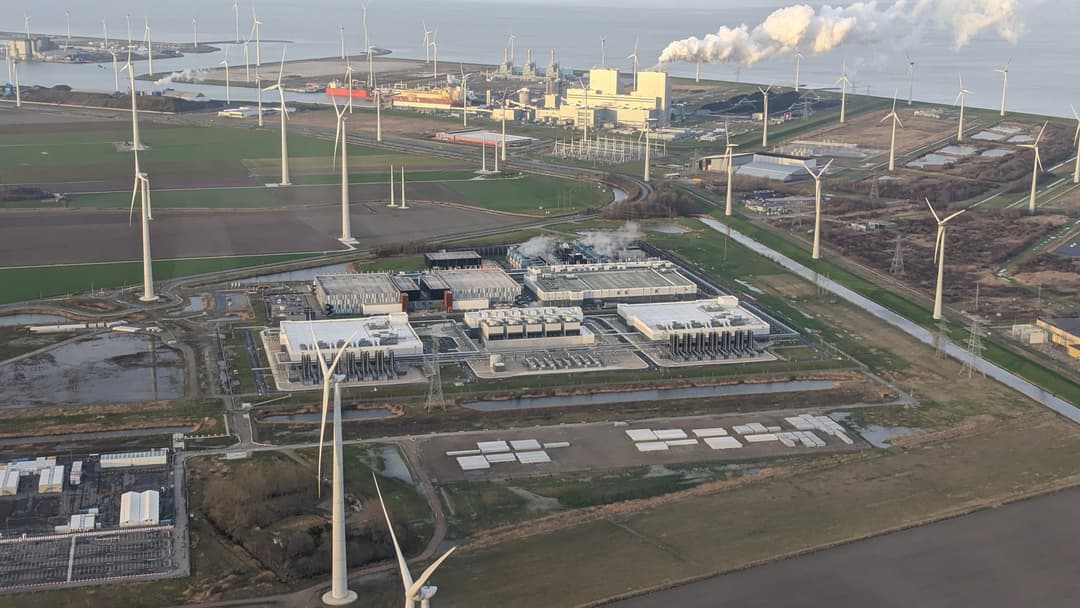
Google’s data center site lists dozens of locations, some running and some under development, and none of them in the Middle East or Africa. Google Cloud had 43 regions worldwide in March 2026. Capital spending was $91.4 billion in 2025 and $51.4 billion in the third quarter of 2026 alone, and on 30 September 2026 Alphabet had $130.5 billion of leases, mostly for data centers and energy, that had not yet started.
Who owns Google and who runs it?
Google LLC is a subsidiary of Alphabet Inc., a Delaware corporation listed on Nasdaq. Alphabet has three classes of common stock: Class A (GOOGL) with one vote a share, Class C (GOOG) with no votes, and Class B with ten votes a share.
According to the 2026 proxy statement, Larry Page holds 27.4% of total voting power and Sergey Brin 25.3%, through Class B shares. A shareholder proposal in the same document says the two control 52% of the votes “while owning less than 11% of outstanding voting stock”. BlackRock held 6.1% of Class A, Vanguard reported 8.5% of Class A in 2024, and Berkshire Hathaway has been building a position since 2025.
Sundar Pichai has been chief executive of Google since October 2015 and of Alphabet since December 2019. John L. Hennessy, a former president of Stanford, has chaired the board since January 2018. Anat Ashkenazi has been CFO since July 2024, and Ruth Porat has been president and chief investment officer since September 2023. Demis Hassabis leads Google DeepMind, Thomas Kurian runs Google Cloud and Neal Mohan runs YouTube.
Google in numbers
| Period | Revenue | Operating income | Net income |
|---|---|---|---|
| 2023 | 307.4 | 84.3 | 73.8 |
| 2024 | 350.0 | 112.4 | 100.1 |
| 2025 | 402.8 | 129.0 | 132.2 |
| Q3 2026 | 127.6 | 40.6 | 26.5 |
| First nine months of 2026 | 357.3 | 121.0 | 201.2 |
Source: Alphabet’s annual and quarterly reports to the US Securities and Exchange Commission. The figures cover all of Alphabet, Google and Other Bets together, in billions of US dollars, and the fiscal year ends on 31 December. Third-quarter 2026 net income fell 25% from a year earlier because of unrealized losses on SpaceX shares, even though operating income grew 30%. Alphabet’s market value was $3.349 trillion at the close on 27 November 2026, fourth in the world.
Google in the Arab world
Google’s Middle East office is in Dubai Internet City, and it runs an Arabic account on X, @googlearabia. In Saudi Arabia it opened a cloud region in Dammam on 15 November 2023 under a license from the Communications, Space and Technology Commission, and customers with a Saudi billing address buy Google Cloud through CNTXT, its exclusive reseller in the kingdom. Qatar has the Doha region. In Kuwait the government chose Google Cloud on 5 January 2023 for a nationwide digital transformation roadmap, and Google said it intended to open an office and a cloud region there, though no Kuwait region was listed as of November 2026.
Google’s 2026 launches for the region included Gemini’s Personal Intelligence feature for paid subscribers (14 April) and Gemini in Chrome, in English first (11 June). In May Gemini became official technology sponsor of the Iraq and Morocco national football teams, and in September university students in the Arab world were offered a free year of Google AI Plus. On 26 October the YouTube Shopping affiliate program opened in Saudi Arabia, the UAE and Egypt with Amazon as its first partner, and on 19 November AI Mode restaurant booking reached the UAE.
Criticism and challenges
US antitrust cases
The Justice Department and a group of states sued Google over search in October 2020, and on 5 August 2024 Judge Amit Mehta ruled that Google ran an illegal monopoly in search. Google had spent more than $26 billion in 2021 on default placements, about $18 billion of it paid to Apple. On 2 September 2025 Mehta declined to break up the search business but barred exclusive deals and ordered Google to share some search data with “qualified competitors”. Final judgment came on 5 December 2025, and appeals by both sides are pending.
In a second case Judge Leonie Brinkema found on 17 April 2025 that Google had illegally monopolized publisher ad servers and ad exchanges. On 2 September 2026 she refused to order a sale of AdX, imposing conduct rules and a technical monitor for six years instead, and Google plans to appeal. On Google Play, a jury found against Google in Epic Games’ case in December 2023, and the two companies settled in March 2026.
European fines and lawsuits
The European Commission fined Google €2.42 billion in 2017 over its shopping service, a fine the EU Court of Justice upheld in September 2024. The €4.34 billion Android fine of 2018, cut to €4.1 billion in 2022, became final in July 2026, and Google paid $5.2 billion including interest. On 5 September 2025 the Commission fined Google about €3 billion over ad tech, which Google appealed. In July 2026 came the first Digital Markets Act fines, €430 million over Google Play and €460 million over Search, and a Stockholm court awarded the comparison site PriceRunner about $2.1 billion. Google has appealed the two fines and is appealing the Swedish ruling.
Competition and privacy
In AI, Google competes with OpenAI, which is private and was valued at $1.25 trillion in November 2026, and with Anthropic, in which it held nearly 14% when Anthropic listed. Google also faces continuing investigations and lawsuits in the US and Europe over location data and ad practices, and some shareholders object to the founders’ voting control: a 2026 proposal asked for one vote per share.
Facts about Google
- Stanford University owns the patent on PageRank, whose first version Page and Brin created while they were there.
- In February 2026 Alphabet sold £1 billion of notes due in 2126, a bond with a 100-year term.
- Alphabet held $75.2 billion of SpaceX shares on 30 September 2026 that it was not yet allowed to sell.
- During the 2026 FIFA World Cup, more than 1.7 billion unique viewers watched World Cup videos on YouTube.
- Pichai’s salary has been $2 million since 2020, but the three-year award he received in March 2026 included units in Waymo worth about $130 million.
Frequently asked questions about Google
Who founded Google?
Larry Page and Sergey Brin, who met at Stanford University in 1995 and built a search engine there called BackRub. Google was incorporated in California on 4 September 1998, a few weeks after Andy Bechtolsheim gave the founders a $100,000 check.
Who owns Google?
Google LLC is owned by Alphabet Inc., the holding company that became its parent on 2 October 2015 and whose shares trade on Nasdaq. The founders, Larry Page and Sergey Brin, control more than half of Alphabet's votes through Class B shares with ten votes each.
Where is Google's headquarters?
At the Googleplex, 1600 Amphitheatre Parkway, Mountain View, California. Google's Middle East office is in Dubai Internet City.
What does the name Google mean?
It is a play on googol, the mathematical term for 1 followed by 100 zeros. Larry Page wrote that the parent's name, Alphabet, means "a collection of letters that represent language" and is also a pun on "alpha-bet", a bet on returns above a benchmark.
Is Google in Saudi Arabia and the UAE?
Yes. Its regional office is in Dubai, and its Dammam cloud region in Saudi Arabia has operated since 15 November 2023, with Google Cloud sold there through the exclusive reseller CNTXT. In October 2026 YouTube Shopping launched in both countries and in Egypt.
What is Google's market value?
The market value belongs to its parent, Alphabet, and was $3.349 trillion at the close on 27 November 2026, fourth in the world. It reached about $4.8 trillion at the close on 8 May 2026, and it changes with every trading session.
What are Google's main products?
Search, YouTube, Android, Chrome, Gmail, Maps, the Gemini AI models and app, Google Cloud and Pixel devices.
Who is the CEO of Google?
Sundar Pichai, who joined Google in 2004, became its chief executive in October 2015 and has also led Alphabet since December 2019.
Sources
- Alphabet annual report for 2025 (Form 10-K), US Securities and Exchange Commission
- Alphabet quarterly report, third quarter of 2026 (Form 10-Q)
- Alphabet third-quarter 2026 results release
- Alphabet 2026 proxy statement
- Google IPO prospectus (2004)
- Google: Our story
- Google blog: inside Google's original garage (2018)
- Larry Page's 2015 founders' letter on Alphabet
- Reuters: Google's 25-year journey (2023)
- TechCrunch: Google avoids breakup in search remedies ruling (2025)
- Courthouse News: ad tech remedies ruling (2026)
- Arab News: Google opens Dammam cloud region (2023)
- Google blog, Middle East and North Africa
- CompaniesMarketCap: Alphabet market capitalization