
Summary
- Egypt is preparing a remote electronic contracting system for foreign investors.
- The system, called the Electronic Passport or e-Passport, covers citizens of about 150 countries.
- It has entered the Financial Regulatory Authority's regulatory sandbox.
- EGX Executive Chairman Omar Radwan said the launch is coming soon.
- Investors would no longer need to complete contracting procedures in person.
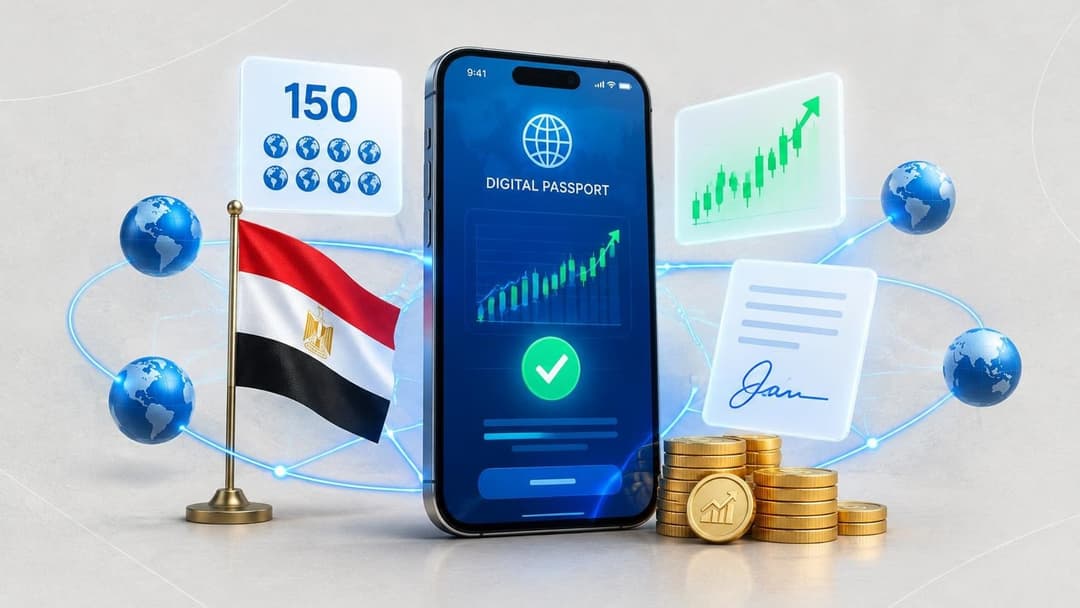
Egypt is moving to make it easier for foreign investors to get into its stock market. A new remote electronic contracting system, known as the Electronic Passport or e-Passport, is set to let citizens of approximately 150 countries complete the paperwork needed to invest on the Egyptian Exchange (EGX) without ever turning up in person.
The system has now entered the regulatory sandbox at the Financial Regulatory Authority (FRA), and it is approaching its final stages ahead of an expected launch.
The news came from Omar Radwan, Executive Chairman of the Board of Directors at the Egyptian Exchange, who disclosed the details in an interview with Asharq Business. According to Radwan, the system has entered the FRA's sandbox and its launch is upcoming as the programme nears the finish line.
For readers less familiar with the term, a regulatory sandbox is essentially a supervised testing ground. A regulator lets a new product or system run under close watch, with clear limits, before it is rolled out to the wider market. In this case, the FRA is overseeing the e-Passport during that phase, while the Egyptian Exchange is the other key party behind the initiative.
So what actually changes? Right now, contracting procedures are the step that sits between a foreign investor deciding to buy Egyptian shares and actually being able to do so. The e-Passport is designed to let those procedures be completed electronically and remotely, removing the need to handle them face to face. Anyone who has tried to open an account in a foreign market knows that the in-person part can be a bit of a faff, especially when you are thousands of kilometres away.
The scale is worth noting, too. Covering citizens of around 150 countries is not a pilot for a handful of neighbouring markets; it reflects a broader push to simplify market entry and widen international participation in Egypt's capital market. Foreign investor access sits right at the centre of the plan.
That said, plenty of details are still to come. The next milestone is the official launch, which should clarify exactly how foreign investors will use the e-Passport to complete their electronic contracting, and what the process will look like in practice. Until then, the system remains in the sandbox phase under the FRA's supervision.
Around Arageek, we often talk about how the friction of getting money into a market matters almost as much as the opportunities inside it. Founders eyeing an eventual listing in Cairo will be watching this closely, because a deeper pool of foreign investors on EGX tends to make the exit route look more realistic.
To be fair, removing an in-person step will not on its own transform a market. Liquidity, valuations and investor confidence depend on far more than onboarding. But I reckon it is a sensible, practical move, and it fits a pattern we are seeing across the region, where exchanges and regulators are digitising the plumbing to compete for global capital.
If the launch lands as expected, the e-Passport could make Egypt's stock market noticeably more accessible to international investors, and that is good news for the wider MENA ecosystem that relies on healthy public markets as the final step in a company's growth story.
🚀 Got exciting news to share?
If you're a startup founder, VC, or PR agency with big updates—funding rounds, product launches 📢, or company milestones 🎉 — AraGeek English wants to hear from you!
✉️ Send Us Your Story 👇