Summary
- Egypt's finance and ICT ministries launched an AI hackathon for startups and developers.
- It sets four challenges in tax services, property valuation, financial analysis and social media.
- The best solutions could be contracted for use inside state institutions.
- ITIDA's Software Engineering Competence Center will help evaluate the entries.
- Contract values and implementation budgets have not been announced yet.
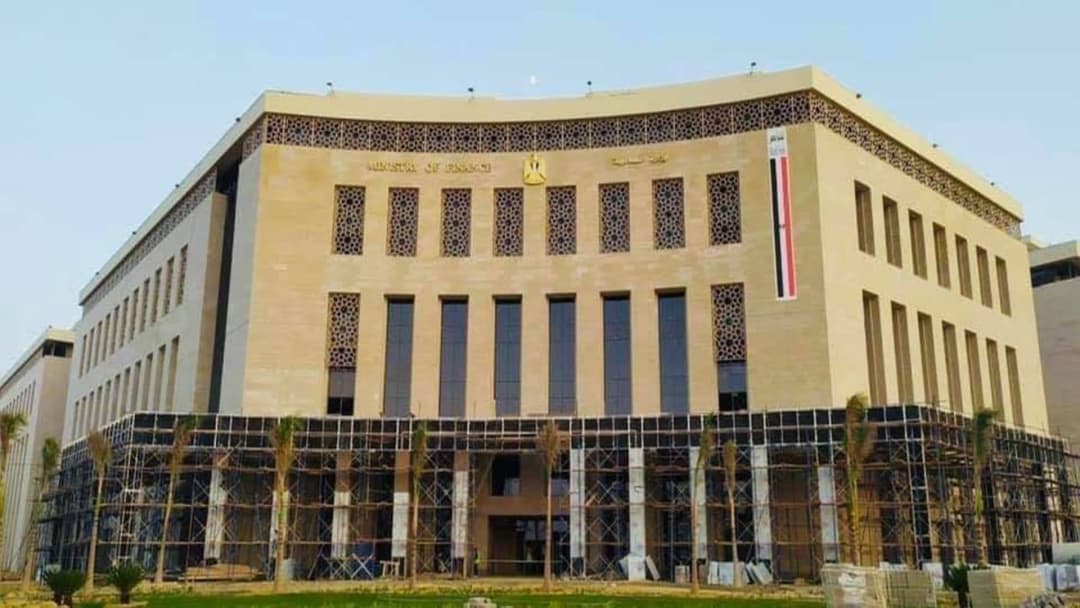
Egypt's Ministry of Finance and Ministry of Communications and Information Technology have launched an AI hackathon that puts four real government challenges in front of startups and developers, with the possibility of contracting the strongest solutions for actual use inside state institutions.
That last part is the bit worth paying attention to. Plenty of innovation competitions end with a stage, a cheque and a round of applause. This one, at least on paper, opens a door to something many young tech companies struggle to get: a government body as a real customer.
The four challenges sit right at the heart of public finance. The first asks for smart applications that help taxpayers and investors understand and benefit from Egypt's packages of tax facilitation measures. The second focuses on smart property valuation, building a system that links real estate, geographic and urban data to analyse property prices and estimate market, rental and indicative values.
The third challenge targets tools for preparing economic and financial reports and analysis, helping policymakers spot risks and opportunities and prepare for future decisions. The fourth, a project called Media 360, is about improving communication and engagement on social media platforms by using data analysis to understand how the public interacts.
Entries will be evaluated by the two ministries together with the Information Technology Industry Development Agency (ITIDA), through its Software Engineering Competence Center (SECC). The centre provides technical support and assesses projects against criteria that include quality, technical efficiency, fit with government needs and feasibility.
Yasser Sobhy, Deputy Minister of Finance, said the initiative aims to use AI to support decision-making and improve services, while boosting government demand for technology solutions and opening new horizons for startups. Ahmed El-Zaher, CEO of ITIDA, said the real value of AI lies in building applications that tackle real-world challenges and deliver tangible impact, adding that the hackathon gives startups a chance to develop their products and turn their innovations into business opportunities.
To be fair, the commercial upside is still conditional. The ministries have not announced the value of any potential contracts, the budgets for implementing the solutions, or how many companies could be contracted. The real test will be whether winning prototypes become live projects, not how many teams sign up.
There is also the data question. A property valuation tool is only as good as the real estate and geographic records it can connect to, and financial analysis tools need accurate, up-to-date figures to produce indicators anyone can rely on. Tax service apps, meanwhile, have to protect taxpayers' data and give answers that do not mislead users about procedures. Moving from pilot to daily operation will take continuous technical testing and clear data governance.
Around Arageek, we often talk about how hard it is for early-stage B2B and GovTech startups in the region to land their first big institutional client. I reckon a government reference customer can be a turning point: a real operating environment to test a product, proof that it works, and a track record that helps win other clients at home and across the region.
If this experiment does lead to signed contracts, it could encourage other government bodies in Egypt to put their own operational challenges in front of tech companies, widening local demand for AI, software and data analytics. That said, a sustainable GovTech market will need more than one-off initiatives: clear procurement rules, budgets for implementation and operation, and defined rules on who owns the products and the data. For Egyptian founders, the prize is not the trophy. It is a product that could be sold to other institutions and, perhaps, exported to regional markets facing similar challenges in digitising public services.
🚀 Got exciting news to share?
If you're a startup founder, VC, or PR agency with big updates—funding rounds, product launches 📢, or company milestones 🎉 — AraGeek English wants to hear from you!
✉️ Send Us Your Story 👇
Follow Arageek on Google
Make Arageek your preferred source, so our news shows first in your search results.
Newsletter
Get the Arageek newsletter
Join more than 60,000 subscribers and get the AI and tech news that matters, straight to your inbox.
Free. Unsubscribe at any time. Read our privacy policy.