Summary
- Escode says continuity plans often miss one risk: losing a critical software supplier.
- Backups and disaster recovery may not restore an application without its original developer.
- Escode argues escrow rights need independent verification that recovery materials are usable.
- The UAE Central Bank's operational risk regulation has been in force since 14 September 2026.
- Escode proposes five questions for leadership teams on supplier dependency and recovery.
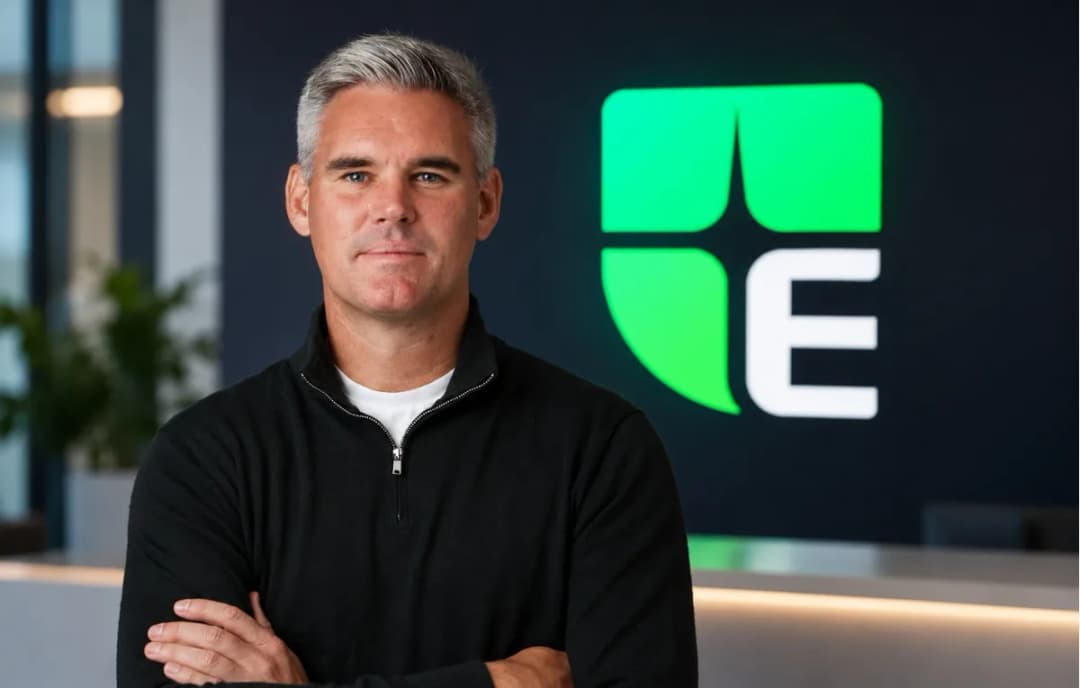
Here's a scenario that should make any risk committee in the region a little uneasy. A financial institution has secure data backups, working disaster recovery infrastructure and an approved business continuity plan. Yet it still cannot restore a critical service, not because of a cyberattack or a server failure, but because a specialist software supplier can no longer provide support. That is the hypothetical at the heart of a new analysis by Alex McCulloch, Director of Market Development – Middle East at software escrow and verification firm Escode.
His argument is simple enough: there is a gap between having a recovery plan and actually being able to execute it. And as organisations across the Middle East lean more heavily on complex software ecosystems, McCulloch says leadership teams need to ask a harder question. Can essential services keep running when a critical software supplier cannot deliver?
The risk, as he describes it, sits in the supply chain. A single service may depend on several software vendors, cloud providers, specialist developers and subcontractors. Supplier insolvency, financial distress, withdrawal of support, geopolitical disruption and concentration among technology providers can all hit operations. A business might restore its servers and data yet still be unable to maintain, rebuild or deploy an essential application without the original developer. To be fair, that is not just an IT headache: interrupted transactions, customer services and contractual obligations can quickly become enterprise-level problems.
McCulloch also takes aim at a common comfort blanket, the contract. Supplier agreements and service-level commitments matter, he writes, but contractual protection is not the same as operational readiness. Even a legal right to an application's source code may be of limited practical value if documentation is outdated, deposits are incomplete, or deployment instructions and dependencies are missing.
"Access rights make recovery possible in principle; verified materials make the recovery strategy more credible in practice."
That is where Escode's own business comes in, and it is worth reading the piece with that in mind. Properly structured software escrow, the analysis explains, gives legally enforceable rights to protected software assets and recovery materials when defined release conditions are met. Independent technical verification then checks whether those materials are complete, current and usable. McCulloch is careful to note that verification does not guarantee uninterrupted services or eliminate every risk; it provides evidence of the capabilities tested and can reveal gaps before disruption occurs.
He points to the company's client base as context. ProgressSoft, Intellect Design, CMA Small Systems and eMcREY, which supply critical payment and financial technology to banks, financial institutions and central banks across the Middle East, have chosen Escode to protect software assets. Escode's work with Vision Bank is offered as an example: a two-stage verification of a critical cloud application that combined a knowledge-transfer assessment with practical scenario testing, covering deposited materials, deployment instructions, configuration information and access mechanisms. The engagement also produced independent build documentation that could support handing the application's development or operation to another team, and Escode continues to monitor software changes and updated deposits.
On the flip side, McCulloch concedes that a single test never settles the matter. Applications change, dependencies evolve and suppliers update their development environments, so materials that were usable last year may not be sufficient today. Recovery arrangements, he says, need ongoing governance and proportionate re-verification.
The regulatory backdrop gives the argument extra weight in the Gulf. In the UAE, the Central Bank's Operational Risk Management Regulation (C 1/2026), in force since 14 September 2026, requires institutions licensed by the Central Bank to identify critical operations, map supporting dependencies and maintain viable contingency and exit plans for material third-party arrangements. The regulation does not prescribe software escrow by name, and McCulloch acknowledges that neither escrow nor verification independently establishes compliance.
For boards, he proposes five starting questions: which essential services rely on software suppliers that cannot readily be replaced; how far dependencies extend, including subcontractors; whether there is enforceable access to current recovery materials; whether the recovery path has actually been tested; and whether the organisation can act within acceptable timeframes. Answering them, he notes, takes technology, procurement, legal, risk and operations working together, with clear executive accountability.
Around Arageek, we often talk about how fast the region's fintech and digital banking scene is growing. I reckon this piece is a useful reminder that growth brings dependency, and dependency needs a plan B that has actually been tried. As McCulloch puts it, the real test of business continuity is not what an organisation expects its suppliers to do during a crisis, but what it can still do when those suppliers can no longer deliver.
🚀 Got exciting news to share?
If you're a startup founder, VC, or PR agency with big updates—funding rounds, product launches 📢, or company milestones 🎉 — AraGeek English wants to hear from you!
✉️ Send Us Your Story 👇