
Summary
- Dr Talal Abu-Ghazaleh launched a $500,000 fund to back Arab inventors.
- “You invent, I will partner” to turn ideas into products.
- The fund targets early-stage intellectual property and practical commercialisation.
- He urged new AI governance and announced a digital polytechnic for 2026.
- The focus is empowering youth and building home-grown, knowledge-driven businesses.
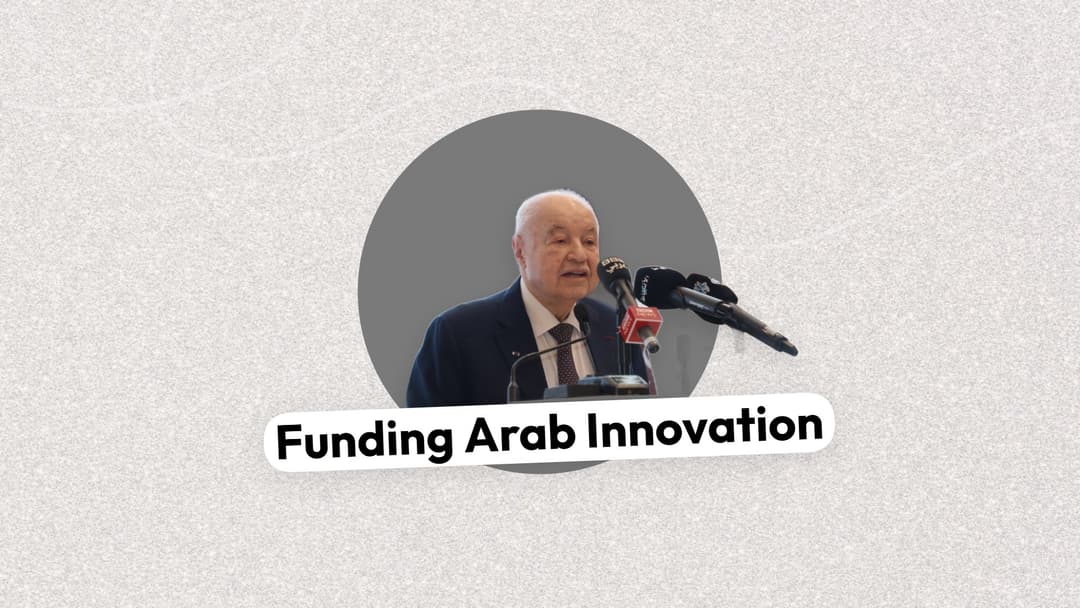
Jordanian business leader Dr Talal Abu-Ghazaleh has unveiled a new $500,000 innovation fund aimed at backing Arab inventors and turning their ideas into real, revenue-generating businesses. The announcement was made during the “Innovation in Times of Challenges” forum in Amman, where policymakers, diplomats and ecosystem players gathered to discuss the region’s next chapter.
At its heart, the fund is simple in concept but bold in message. As Abu-Ghazaleh put it during the event, “If you invent something new, we will support you by investing in that invention. You invent, and I will partner with you to transform the invention into a product.” It’s a direct approach, less talk, more action, and I reckon that clarity will resonate with founders who are often caught in a bit of a faff chasing advisory programmes that never quite write a cheque.
The initial $500,000 allocation is positioned as a starting point, a foundational investment rather than a ceiling. The idea is to offer capital directly into promising inventions, moving beyond theoretical mentorship towards practical commercialisation. That distinction matters. Across MENA, we’ve seen plenty of panels about innovation; fewer investors are willing to roll up their sleeves and actually fund early-stage intellectual property.
Abu-Ghazaleh noted that his group has been engaged in innovation and digital transformation for over 55 years, describing the organisation as something of an “innovation machine” focused on producing knowledge and digital solutions. Whether one agrees with the phrasing or not, the message is clear: innovation, in his view, is no longer optional. It is the engine of economic growth, particularly for Arab economies seeking to diversify away from traditional sectors.
And believe it or not, this move comes at a time when governments and private institutions across the Middle East are doubling down on deep tech, artificial intelligence and knowledge industries. From Riyadh to Doha, digital transformation is becoming a strategic priority rather than a buzzword. In that context, a targeted invention fund feels spot on.
Beyond the fund itself, Abu-Ghazaleh also used the platform to call for a new governance framework for artificial intelligence and the internet. He argued that the speed of technological change demands international policies capable of addressing cross-border digital crime and emerging risks linked to AI. Plans are underway to form a specialised working group focused on responsible AI governance, an area that many leaders talk about, but few concretely structure.
There was also a strong push on education. A new digital learning platform, the Talal Abu-Ghazaleh Global Digital Polytechnic, is scheduled to launch in July 2026. The aim is to provide digital-first programmes that give students access to international learning without the financial burden of travelling or living abroad. In a region where youth unemployment remains stubbornly high, accessible digital education could be more than just a nice add-on, it could be transformative.
Climate change, too, featured prominently in the discussion. Abu-Ghazaleh described it as one of the defining challenges of our time, stressing that investment in human capital and innovation is essential for building sustainable, future-ready economies. That linkage between innovation, sustainability and economic resilience is becoming increasingly central to policy conversations across the Gulf and Levant.
From my side, covering startups across MENA for Arageek, I’ve lost count of how many young founders say the same thing: “We don’t need another workshop. We need someone to believe in the product.” This fund will not solve every funding gap in the region, far from it. But as a signal, it’s powerful. It says to inventors: bring your idea, and let’s build something that lasts.
Of course, $500,000 is modest by global venture standards. On the flip side, when deployed wisely into early-stage innovation, even relatively small cheques can unlock serious momentum. The real test will be in execution, how projects are selected, how intellectual property is protected, and how inventions are guided from prototype to market without drowning in process.
Still, the tone is clear. Empower Arab youth. Invest in knowledge. Build businesses from ideas, not just from imported models. In a region hungry for home-grown innovation, that message will definately strike a chord.
🚀 Got exciting news to share?
If you're a startup founder, VC, or PR agency with big updates—funding rounds, product launches 📢, or company milestones 🎉 — AraGeek English wants to hear from you!
✉️ Send Us Your Story 👇