
Summary
- Saudi Arabia's Digital Entrepreneurship Center has launched CODE AI Catalyst for AI startups.
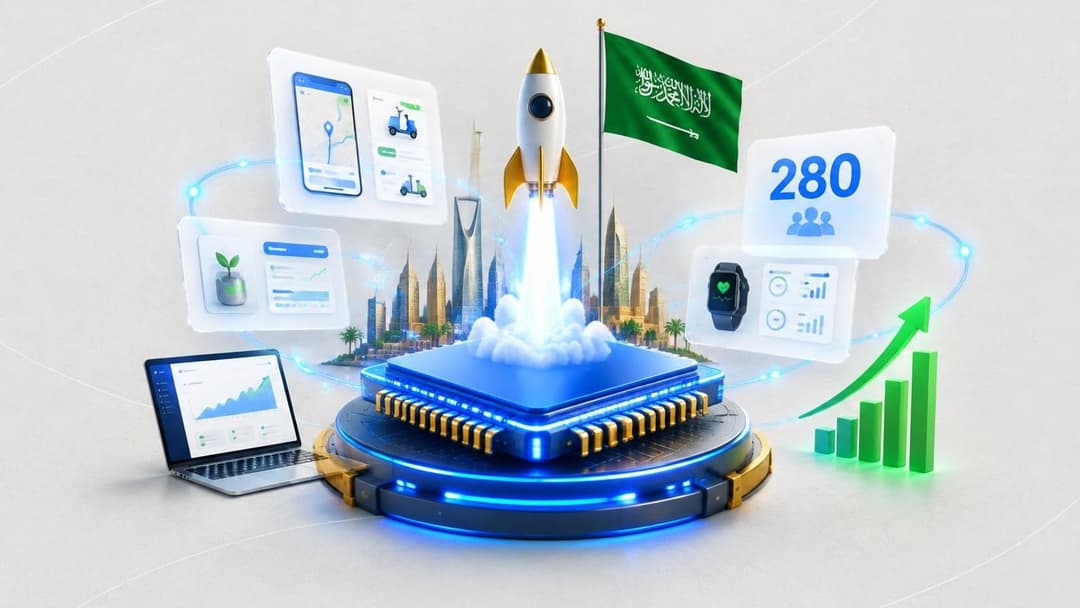
- The four-month programme aims to support 280 startups and early-stage ventures.
- It focuses on the jump from a minimum viable product to market entry.
- Mentoring, workshops, technical support and investor access run across seven CODE centres.
- No cash grants were announced, and registration opened this week.
Saudi Arabia's Digital Entrepreneurship Center, better known as CODE, has launched CODE AI Catalyst, a four-month programme designed to help 280 AI startups and early projects move from a minimum viable product to market entry. CODE sits under the Ministry of Communications and Information Technology (MCIT), and registration for the programme opened this week.
That is a big cohort. Most accelerators in the region take a few dozen companies at a time, so 280 is a clear sign of how wide a net the ministry wants to cast.
The focus is just as telling. A minimum viable product, or MVP, is the first working version of a product, good enough to test with real users but rarely ready to sell at scale. The stretch between that early version and a product people actually pay for is where plenty of young companies stall, and that is exactly the gap this programme targets.
So what do participants get? According to the ministry, the programme offers specialised mentorship, workshops, technical support and digital tools, along with chances to connect with experts, investors and strategic partners. It runs across seven CODE centres, which should make it easier for founders outside the main hubs to take part.
What it does not offer, at least for now, is money. No cash grants were announced as part of the launch. To be fair, that is not unusual for a government-run support programme of this kind, and access to the right investors can matter more than a small cheque at the MVP stage. That said, founders hoping for direct funding will need to look elsewhere.
The timing is no accident either. The launch falls in what Saudi Arabia has designated its Year of AI. The same week, the Saudi Data and AI Authority (SDAIA) launched a Year of AI programme with universities, so the push is coming from more than one direction.
It also lands at a tricky moment for funding. October was a weak month for the region's startups: total MENA startup funding fell to $40m across 32 deals. Saudi Arabia still came out on top, with nine Saudi startups raising $18.8m, or 47% of all MENA startup funding that month.
Around Arageek, we often talk about how early-stage support matters most when later-stage money is scarce. I reckon this is one of those moments. When big rounds dry up, programmes that help young companies get a product to market, and in front of investors, become a lot more valuable.
On the flip side, a cohort of 280 is a lot to manage over four months. How much hands-on time each team gets with mentors and investors will go a long way to deciding whether the programme delivers real market entries or simply a busy calendar of workshops.
CODE is inviting AI startups and entrepreneurs to register through the programme's online form. For Saudi founders sitting on a promising AI prototype, it looks like a sensible next step, and for the wider MENA ecosystem it is another sign that the kingdom wants a deep bench of home-grown AI companies, not just big headline investments.
🚀 Got exciting news to share?
If you're a startup founder, VC, or PR agency with big updates—funding rounds, product launches 📢, or company milestones 🎉 — AraGeek English wants to hear from you!
✉️ Send Us Your Story 👇