Summary
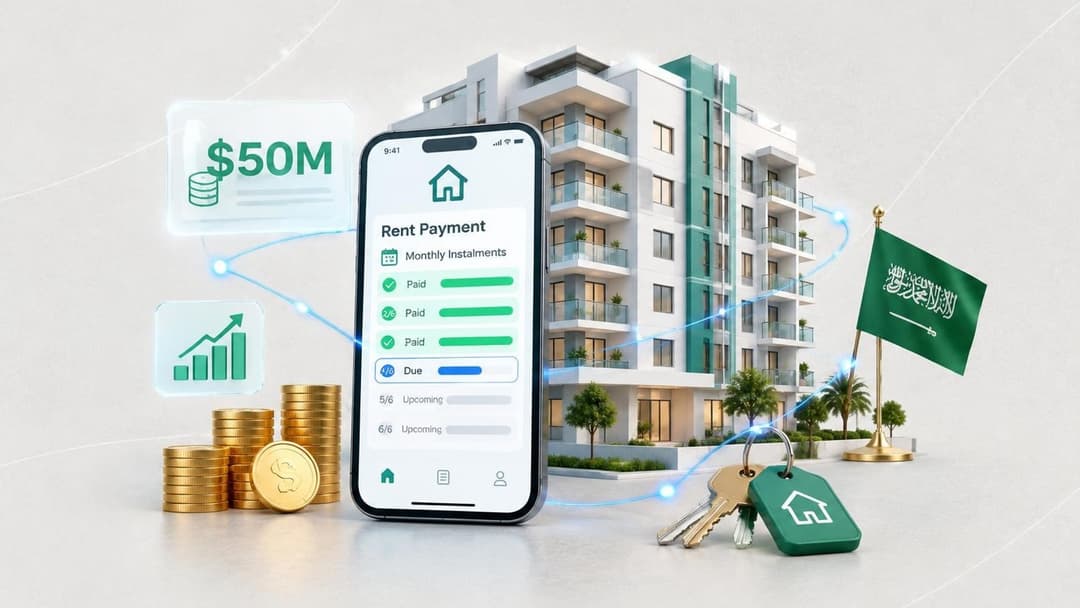
- Ejari has expanded its facility with Partners for Growth to $50M.
- The asset-backed financing follows a Sharia-compliant murabaha structure.
- It funds rent payments behind Ejari's rent now, pay later service.
- The Riyadh startup operates in more than 40 Saudi cities.
- Ejari is preparing to close a Series A round of undisclosed size.
Saudi proptech and fintech startup Ejari has increased its existing financing facility with Partners for Growth (PFG) to $50 million (SAR 187.5 million). The money comes as asset-backed financing structured as murabaha, a Sharia-compliant arrangement, and it will be used to fund the rental transactions at the heart of the company's business.
This isn't a brand-new relationship. The facility extends a financing partnership between the two that began in 2024, so PFG is putting more money behind a borrower it already knows.
So what does Ejari actually do? It runs a rent now, pay later service. The landlord receives the full annual rent upfront, while the tenant pays it back in monthly instalments. It's a simple idea that sorts out a common headache: finding a full year's rent in one go can be a real strain on a household budget, and a bit of a faff to arrange.
Founded in 2022 and headquartered in Riyadh, Ejari now operates in more than 40 Saudi cities. It is also getting ready to move into commercial leasing, alongside growing its core residential rental business.
Demand doesn't seem to be the problem. According to entARABI, the company has received requests to facilitate rent payments worth close to SAR 2 billion. That sits against a fast-growing rental market: the number of lease contracts in the Kingdom rose 37% year on year to around 446.3 thousand in August 2026, while their total value climbed 32% to SAR 10.62 billion.
Here's where the structure gets interesting. Ejari is keeping two pots of money for two very different jobs. The PFG facility is ring-fenced for financing rental transactions, the actual rent paid to landlords. Equity, on the other hand, is meant for building the business itself.
On that front, the startup is preparing to close a Series A round in the coming period, though it hasn't disclosed the size. That fresh equity is earmarked for developing its technology, its team and its services, strengthening its ability to expand across the Saudi market.
Ejari already has a fairly crowded cap table for a company of its age. Its existing investors include BECO Capital, Vision Ventures, anb seed, Rua Growth Fund, Salica Oryx Fund, the Aqar platform, Sanabil 500 MENA and Alinma Pay.
To be fair, the split between debt and equity is exactly what you'd expect from a lending-heavy model. Funding every rent payment with equity would burn through investor money at speed; a debt line backed by the underlying assets lets the loan book grow without diluting shareholders each time demand rises.
Around Arageek, we often talk about how embedded finance is creeping into everyday spending in the Gulf, from groceries to school fees. Rent is the biggest monthly bill for most people, so I reckon it was only a matter of time before it got the same treatment.
That said, the real test is still ahead. Moving into commercial leasing and closing the Series A will show whether Ejari can turn strong demand into a durable business. For the wider MENA ecosystem, it is another sign that specialised debt providers are increasingly comfortable backing regional fintechs with real assets behind them.
🚀 Got exciting news to share?
If you're a startup founder, VC, or PR agency with big updates—funding rounds, product launches 📢, or company milestones 🎉 — AraGeek English wants to hear from you!
✉️ Send Us Your Story 👇